Шорты создать
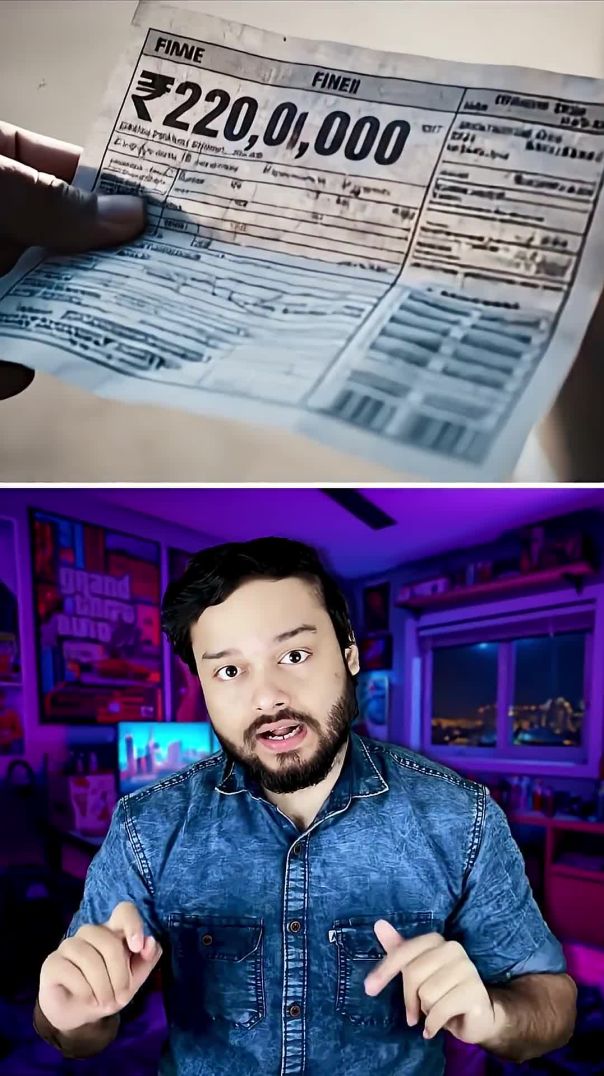
Recently in Muzaffarnagar, Uttar Pradesh, a surprising incident caught public attention when a scooter rider received a traffic challan fine of more than twenty lakh rupees. The fine amount appeared unusually large for simple violations such as riding without a helmet or lacking proper vehicle documents. A picture of the challan quickly spread on social media, causing confusion and criticism.
After the challan went viral, the local police clarified that the huge amount was not intentional. It was the result of a clerical mistake made while entering the details into the digital system. Instead of typing the correct section of the Motor Vehicles Act, the officer entered those numbers into the fine amount field, which automatically converted it into an extremely high penalty.
The police later corrected the mistake and stated that the actual fine should have been only a few thousand rupees. The scooter, which had been seized because the rider did not have the required documents, remains under standard legal procedure. Officials stressed that the error was accidental and steps would be taken to prevent similar mistakes in the future.
The incident sparked discussions about the reliability of digital challan systems and the need for proper training and checks. It also highlighted how quickly misinformation can spread online, especially when unusual situations occur. Despite the confusion, the issue was resolved promptly once the error was identified.
Subscribe for more educational content and unlock knowledge every day with FactTechz!

1
0
3
6

A tourist from India visited a McDonald’s outlet abroad (in Malaysia, at Kuala Lumpur International Airport) and ordered what she believed to be a vegetarian burger. When the food arrived, she discovered that the burger contained beef. She was upset because, coming from India, she had dietary or cultural expectations of vegetarian options and felt the item she ordered was misrepresented.
She confronted the staff at the counter, visibly emotional. She asked why she was served meat when she had ordered vegetarian food, emphasising “I’m from India” and how that should have meant she didn’t receive beef. At one point she even threw the burger box on the floor before engaging with the staff.
The restaurant’s staff explained that in that country’s menu, the burger she picked was not labelled as vegetarian and that they did not offer the same vegetarian-options as in India. The tourist’s anger and frustration stemmed largely from the mismatch between her expectations—formed by her experiences in India—and the outlet’s local menu and labelling.
Subscribe for more educational content and unlock knowledge every day with FactTechz!
1
0
1
4

Sony created a patent for an advertising system that makes TV commercials interactive instead of passive. This could include actions like speaking, making a gesture. The system is designed to keep the viewer engaged.
One part of the patent that attracted a lot of attention is the suggestion that a viewer could be required to say the brand’s name out loud.
The concept has raised mixed reactions. Some people find it interesting or even entertaining, while others see it as intrusive.
It’s important to note that having a patent does not mean the feature is widely used. Companies often patent ideas that may or may not become real products. Sony’s interactive ad system is more of a technological possibility than a widespread reality, but it shows how companies are exploring new ways to capture attention.
Subscribe for more educational content and unlock knowledge every day with FactTechz!
2
0
2
15